



Introduction to gout
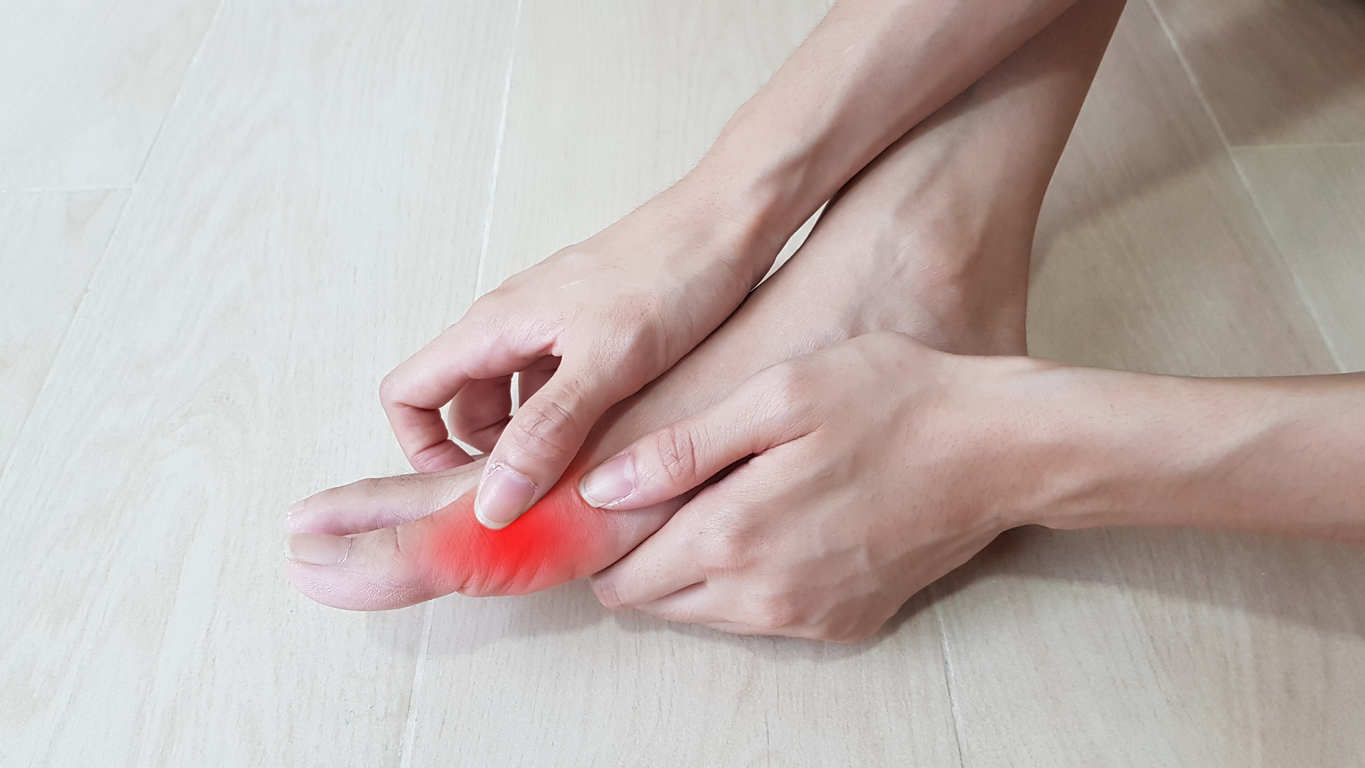
Gout is a type of joint disorder that occurs in individuals with high uric acid levels. It is characterized by sudden, severe attacks of pain, swelling, redness, and tenderness in one or more joints, most commonly affecting the big toe.
A sudden gout attack is more likely to occur at night, although onset can also happen during the day. These sudden attacks can wake a person from sleep in the middle of the night with a sensation as if the big toe is on fire. The affected joint is hot, swollen, and so tender that even the weight of bedsheets on it may feel unbearable.
The symptoms of this disease may subside after some time, but there are ways to manage symptoms and prevent recurrence.
What we cover in this content:
- Symptoms of Gout
- Causes of Gout
- Factors That Increase Uric Acid Levels in the Body
- Complications of Gout
- Diagnosing Gout
- Gout Treatment and Rheumatologist Recommendations
- Gout Statistics
- Recent Gout Studies
Symptoms
Gout symptoms appear suddenly and most commonly manifest at night, though onset can also occur during the day.
- Severe Joint Pain:
Gout can affect any joint, but the first attacks typically occur in the big toe (first metatarsophalangeal joint). Other commonly affected joints include the ankles, knees, elbows, wrists, and fingers. The pain is usually most intense during the first 4 to 12 hours after onset. - Lingering Discomfort:
After the severe pain subsides, some joint discomfort may persist from several days to a few weeks. Subsequent attacks are likely to last longer and affect more joints. - Inflammation and Redness:
The affected joint(s) become swollen, tender, warm, and red. - Limited Range of Motion:
As the condition progresses, moving the joints normally may become difficult.
Causes
A gout attack begins when uric acid crystals deposit in a joint, triggering an immune system response that causes joint inflammation. This inflammation is characterized by pain, swelling, warmth, and redness in the joint.
Uric acid is produced when the body breaks down purines, which occur naturally in the body. Purines are also found in certain foods, including:
Red meat
Organ meats (such as liver)
Purine-rich seafood: anchovies, sardines, shellfish (mussels, clams), trout, and tuna
Alcoholic beverages (especially beer) and sugar-sweetened beverages containing fruit sugar (fructose) elevate uric acid levels.
Unlike other mammals, humans do not have the enzyme that breaks down uric acid, so uric acid is excreted through the kidneys. Now, if uric acid production increases or uric acid excretion decreases due to kidney failure, the level of uric acid in the blood increases and the likelihood of a gout attack increases. However, it should be noted that not everyone who has high uric acid will necessarily have a gout attack.


Risk Factors
Elevated uric acid levels in the body increase the likelihood of developing gout. Factors that raise uric acid levels include:
- Diet:
High consumption of red meat, shellfish, sugar-sweetened beverages (with fructose), and alcohol—particularly beer—elevates uric acid levels, increasing gout risk. - Weight:
Excess body weight causes the body to produce more uric acid while impairing the kidneys’ ability to excrete it. - Medical Conditions:
Untreated hypertension, diabetes, obesity, metabolic syndrome, and heart or kidney disease heighten gout risk. - Certain Medications:
Low-dose aspirin
Hypertension drugs: thiazide diuretics, ACE inhibitors, beta-blockers
Anti-rejection drugs (e.g., cyclosporine) for transplant recipients - Family History:
Higher susceptibility if family members have gout. - Age & Sex:
More common in men due to naturally lower uric acid levels in women
Women’s uric acid levels approach men’s after menopause
Men typically develop gout earlier (ages 30–50)
Women usually experience symptoms after menopause - Recent Trauma/Surgery:
Recent surgery, injury, or even vaccination can trigger gout attacks in some individuals.
Complications of Gout
Individuals with gout may develop more severe conditions, such as:
- Recurrent Gout:
Some people experience gout only once, while others have recurrent attacks multiple times per year. Medications help prevent gout attacks in individuals with recurrent gout. Left untreated, gout can cause joint erosion and destruction. - Advanced Gout (Tophaceous Gout):
Untreated gout may lead to deposits of uric acid crystals under the skin, forming nodular masses called tophi. Tophi can develop in various areas including fingers, hands, feet, elbows, or the Achilles tendon (along the back of the ankle). While typically painless, tophi may become swollen and tender during gout attacks. - Kidney Stones:
Uric acid crystal accumulation in the urinary tract can cause kidney stones in gout patients. Medications help reduce the risk of developing kidney stones.
Diagnosing Gout
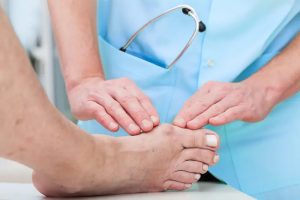
Diagnosing gout requires a combination of clinical evaluation, physical examination, and laboratory investigations.
Physical Examinations:
- Joint Assessment: Examination of the affected joint(s) for redness, swelling, warmth, and tenderness.
- Medical History Review: Evaluation of family history, dietary habits, medications, and underlying medical conditions.
Laboratory Investigations:
- Synovial fluid test: This test is the most definitive way to diagnose gout. In this test, a sample of inflamed joint fluid is removed with a needle and examined under a microscope. Urate crystals may be visible when the fluid is examined under a microscope.
Blood Tests:
- Serum Uric Acid: Elevated levels support diagnosis but are neither sufficient nor required for confirmation (asymptomatic hyperuricemia ≠ gout).
- Inflammation tests: Tests such as ESR (erythrocyte sedimentation rate) and CRP (C-reactive protein) are done to check for inflammation in the body.
- Urine test: A urine test can help check the amount of uric acid excreted in the urine.
- Blood test: Your doctor may recommend a blood test to measure the level of uric acid in your body. However, sometimes blood test results can be misleading.
Imaging Studies
- Radiography (X-ray): Can reveal chronic gout-related joint changes such as tophi (crystalline deposits) and bone erosion.
- Ultrasound:Detects crystalline deposits and joint inflammation using sound waves.
- Magnetic Resonance Imaging (MRI): Provides detailed images of joints and surrounding soft tissues.
- Dual-Energy Computed Tomography (DECT):Visualizes urate crystals in joints by combining X-ray images taken from multiple angles.
When to Seek Medical Care
Call your doctor if you experience sudden, severe pain in a joint. Untreated gout can lead to worsening pain and joint damage. A fever and warmth in the joints are signs of infection. If you experience these symptoms, see your doctor immediately.
Further Reading: Carpal Tunnel Syndrome
Gout treatment
Gout medications primarily serve two purposes:
Reducing inflammation and pain during acute attacks
Lowering serum uric acid levels for long-term management
Drug selection depends on attack frequency, symptom severity, and patient comorbidities.
Medications for Acute Attacks & Recurrence Prevention:
- Nonsteroidal anti-inflammatory drugs (NSAIDs) These include ibuprofen (Advil, Motrin IB, etc.) and naproxen sodium (Aleve), as well as stronger ones like indomethacin (Indocin, Thiorbex) or celecoxib (Celebrex). NSAIDs carry a risk of stomach pain, bleeding, and ulcers.
- Colchicine: Colchicine (Colcrys, Gloperba, Mitigare) is an old and effective anti-inflammatory medication for treating and reducing gout pain. It works by reducing inflammation and moving white blood cells to the inflamed joint. However, it comes with side effects such as nausea, vomiting, and diarrhea.
- Corticosteroids: Corticosteroids, such as prednisone, are strong anti-inflammatory medications that can be taken orally or injected into an inflamed joint to control the inflammation and pain of gout. Side effects of corticosteroids may include mood swings, increased blood sugar levels, and high blood pressure.
Medications to prevent gout complications
If gout attacks occur multiple times per year or involve infrequent but extremely painful episodes, your physician may recommend medication to reduce the risk of gout-related complications. Urate-lowering therapy should also be considered if:
Joint X-rays reveal gout-related structural damage
The patient has chronic kidney disease or kidney stones
Medications like Probenecid (a uricosuric agent):
Mechanism: Enhances the kidneys’ capacity to eliminate uric acid
Side Effects: Skin rashes, stomach pain, and potential kidney stone formation
Long-term medications to prevent gout flare-ups
These medications reduce blood uric acid levels and prevent the formation of uric acid crystals and, as a result, recurrence of the disease.
- Xanthine oxidase inhibitors to reduce uric acid production
- Allopurinol:
Primary first-line urate-lowering therapy (ULT)
Mechanism: Inhibits xanthine oxidase to reduce uric acid production
Benefits:
Prevents urate crystal formation
Reduces attack frequency/severity
Improves quality of life
Side Effects: Rash, headache, nausea - Febuxostat (Uloric®):
Alternative for allopurinol-intolerant patients
Non-purine xanthine oxidase inhibitor - Probenecid:
Uricosuric agent enhancing renal uric acid excretion - Pegloticase (Krystexxa®) + Lesinurad (Zurampic®):
Pegloticase: Uricase enzyme for refractory gout
Lesinurad: Uricosuric used in combination therapy
Lifestyle Management for Gout
Effective prevention requires combining pharmacotherapy with:
- Drinking plenty of water and non-alcoholic beverages
- Avoid alcoholic and sugar-sweetened beverages.
- Avoid excessive consumption of foods high in purines such as red meat, organ meats such as liver, and seafood such as mackerel, sardines, oysters, scallops, salmon, and tuna.
- Consuming low-fat dairy products
- Consuming fruits and vegetables such as cherries, berries, tomatoes, cucumbers, celery, pumpkin, and eggplant are suitable for patients with gout.
- Nuts, eggs, whole-grain bread, brown rice, and whole-grain pasta contain fiber and help reduce uric acid levels.
- Regular exercise, maintaining a healthy weight, and engaging in light activities such as walking, cycling, and swimming.
Rheumatologist guidelines for managing gout:
- Regular use of medications
- Lifestyle changes with diet, weight loss, and regular physical activity
- Controlling other diseases such as high blood pressure, diabetes, heart and kidney diseases
- Regular visits to the doctor to check uric acid levels and adjust medications
Important Considerations:Gout management requires patience and commitment, as medications may take several months to achieve full therapeutic effect. Never self-medicate or make significant dietary changes without consulting your physician.
Gout Statistics
Historically, gout was mistakenly likened to nutritional deficiency diseases like rickets or scurvy. Dubbed the “disease of kings,” it afflicted affluent and royal figures including Benjamin Franklin and Thomas Jefferson. Despite its documentation since Ancient Egypt (circa 2640 BCE), gout remains a significant global health concern with rising prevalence.
The increase in gout is related to various factors, including lifestyle changes, population aging, and the prevalence of chronic diseases. According to some studies, about 1 to 2 percent of the adult population of Iran, especially men and usually at older ages, suffer from gout. Treatment of this disease is very important and has a special place in the research programs of doctors.
New studies
As mentioned, excess urate in the bloodstream (known as hyperuricemia) is considered the primary cause of gout. However, most people with high urate levels never actually develop the disease.
What is hyperuricemia?
Hyperuricemia is the medical term for having high levels of uric acid in the body and has long been considered the main cause of gout. Uric acid is a waste product produced when the body breaks down chemicals called purines found in foods and drinks. Most uric acid dissolves in your blood, passes through your kidneys, and leaves your body in urine. Hyperuricemia occurs when too much uric acid remains in your body, causing it to clump together into sharp crystals. These crystals can deposit in your joints and cause gout. They can also collect in your kidneys and form kidney stones. With all that said, hyperuricemia cannot be the sole trigger for urate crystal deposition in the joints.
Most individuals with high uric acid levels may have none of these associated symptoms or problems. In fact, asymptomatic hyperuricemia is nearly four times more common than gout.
Recent studies on gout
In a recent study published in the journal Arthritis & Rheumatology, an international research team led by the University of California San Diego School of Medicine identified a new molecular pathway that causes gout and its progression toward joint tissue erosion. These findings suggest that lubricin serves as a novel therapeutic target for preventing and treating gout. Lubricin is a specific protein found in synovial fluid (joint fluid). This protein plays a crucial role in joint lubrication and reducing friction between joint surfaces. Simply put, lubricin acts like a natural oil that allows joints to move smoothly and prevents their damage.
Additional experiments confirmed that under healthy conditions, lubricin suppresses the secretion of urate and xanthine oxidase (the enzyme that produces urate) by activating white blood cells. It also prevents urate crystallization within the joint. The researchers then evaluated several patients with common gout and confirmed that they also exhibited significantly reduced levels of lubricin. Regarding this, Robert Terkeltaub, one of the researchers mentioned, stated:
- “This natural yet highly abnormal disorder provides a unique opportunity to look at gouty arthritis through a different lens and understand what molecular processes contribute to the disease independently of hyperuricemia.”
- “Our findings indicate that lubricin may be a new biomarker for tracking gout risk in patients. New drugs aimed at maintaining and boosting lubricin could limit the onset and progression of gouty arthritis.”
Resources:
my.clevelandclinic


No comment