



Bone Density Scan
Bone Density Measurement is used to diagnose various types of osteoporosis throughout the entire body. This method measures the weight of bone mineral per cubic centimeter. At the Iran Rheumatism Center, the bone density of the lumbar spine and hip regions is assessed using American-made referral devices, measured against standardized criteria, and compared with normal samples.
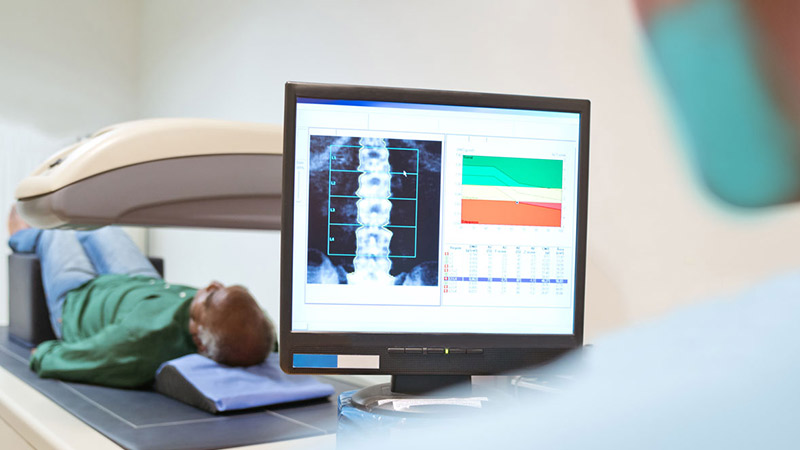
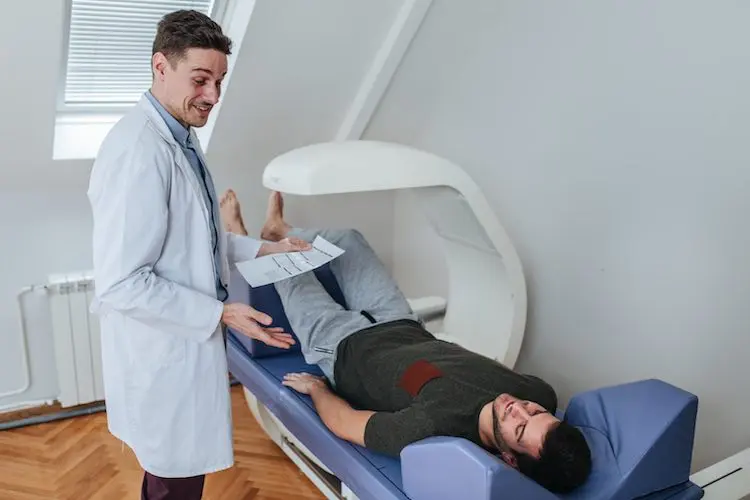
Bone densitometry: How to detect osteoporosis before a fracture?
Diagnosing osteoporosis before fractures occur is typically done through Bone Mineral Density (BMD) Testing using DEXA Scan (Dual-Energy X-ray Absorptiometry), which measures the mineral content in bones and provides a T-Score. This method identifies reduced bone density (osteopenia) or osteoporosis (osteoporosis). Blood tests to check calcium, vitamin D, and related hormone levels may also aid in diagnosis. These methods enable preventive interventions (medication, dietary changes, exercise).
Frequently asked questions about bone density testing
DEXA Scan measures bone mineral density. Its primary purpose is to diagnose osteoporosis or osteopenia to prevent potential fractures. It is painless and non-invasive.
Reasons for importance:
- Nerve Conduction Study (NCS): Measures the speed and strength of nerve signals.
- Electromyography (EMG): Analyzes electrical activity in muscles at rest and during contraction.
- Women over 65 and men over 70.
- Individuals with a history of bone fracture after minor trauma.
- Patients on long-term corticosteroid treatment (e.g., prednisone).
- Women with early menopause (before age 45) or men with low testosterone.
- Those with a family history of osteoporosis.
- Avoid calcium or vitamin D supplements 24 hours before the test.
- Wear loose clothing without metal zippers/buttons.
- Inform your doctor if you recently had an X-ray or contrast agent injection.
Results are reported as T-Score (comparison with healthy young people) and Z-Score (comparison with peers):
T-Score (comparison with healthy young adults):
• Above -1.0: Normal- • Between -1.0 and -2.5: Osteopenia (mild bone loss)
- • Below -2.5: Osteoporosis
Your doctor will recommend treatment/follow-up based on these scores and risk factors.
No. Bone density testing is performed with very low-dose X-rays (less than one-tenth of a plain radiograph) and is not dangerous.
- Calcium/vitamin D supplementation (under medical supervision).
- Bone-strengthening exercises (e.g., walking, light weightlifting).
- Quit smoking and alcohol.
- Possible prescription of anti-osteoporosis medications (e.g., bisphosphonates).
- Normal initial result: Every 2–5 years.
- Osteopenia/osteoporosis diagnosis: Every 1–2 years (per doctor’s advice).
- Patients undergoing treatment: Typically every 1–2 years to monitor response.
No. It resembles a simple X-ray, takes 10–15 minutes, and requires no anesthesia or injections.
Rarely. Only in specific cases (e.g., chronic diseases like type 1 diabetes/kidney disorders) or long-term steroid use.
DXA is the most accurate and safest method for measuring bone density. CT and MRI are primarily used to assess bone structure or surrounding tissues and are less precise for density measurement.