



Nuclear Medicine
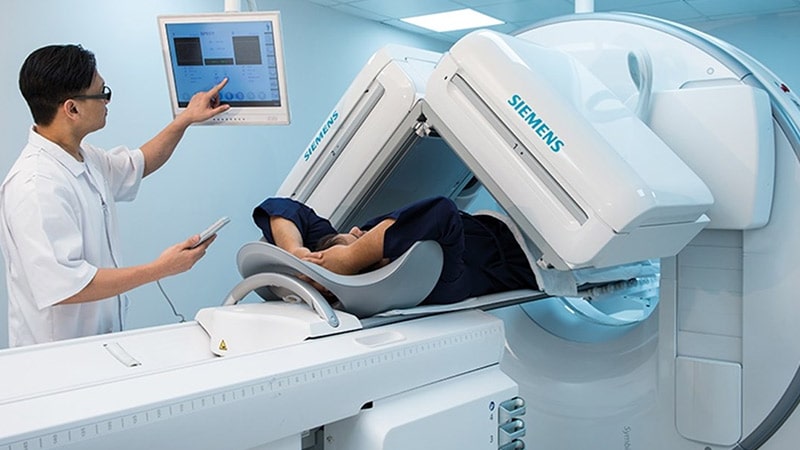
Nuclear Medicine provides functional imaging of metabolic processes and bodily functions, available at the Iran Rheumatology Center.
Nuclear Medicine Imaging Includes:
- Bone Scan
- Brain Scan
- Lung Scans
- Thyroid Scan
Frequently Asked Questions About Nuclear Medicine:
Nuclear medicine imaging uses very small amounts of radioactive material (radiopharmaceuticals) that are injected, swallowed, or inhaled. These materials accumulate in specific cells or organs and are detected by special cameras (e.g., gamma camera or PET/CT). The resulting images reveal organ function rather than just structure.
- Detecting cancer and assessing its spread
- Evaluating heart blood flow in coronary artery disease (nuclear cardiac stress test)
- Identifying bone infections or hidden fractures (bone scan)
- Assessing thyroid, kidney, or lung function
No. Radiation doses are very low, controlled, and pose no health risk. The radioactive material clears from your body within hours to days. Pregnant or breastfeeding women must inform their doctor before testing.
- Fasting may be required (for PET/CT scans) or Avoid certain medications (as instructed)
- Wear comfortable, metal-free clothing
- Inform staff about pregnancy, breastfeeding, or allergies
No. You may feel brief warmth during radiopharmaceutical injection, but the process is non-invasive and painless.
- CT Scan:Shows organ structure using X-rays
- PET/CT:Combines structural (CT) and functional (PET) imaging to reveal metabolic activity (e.g., in cancer cells)
Residual radiation is minimal, but precautions include:
- Avoid close contact with children/pregnant women for 24 hours
- Drink plenty of fluids to flush out the tracer
Bone scans detect inflammation, infection, arthritis, or cancer metastases invisible on standard X-rays, offering high sensitivity for early diagnosis.
Side effects are rare. Some may experience:
- Mild allergic reactions (skin redness/itching)
- Temporary warmth or dizziness after injection
- These typically resolve spontaneously.
Images are immediately viewable, but final interpretation by a nuclear medicine specialist takes 1–3 business days.
Yes. Radiopharmaceutical doses are adjusted for a child’s weight/age. Used to diagnose congenital diseases, infections, or tumors in children.
Depends on the radiopharmaceutical. Some agents may stress kidneys. Always disclose kidney disease history to your doctor beforehand.
Hybrid imaging (e.g., PET/MRI) increases diagnostic accuracy:
MRI shows soft-tissue details
Nuclear imaging reveals metabolic activity
Crucial for tumor detection and characterization.